The Iconic Channels & Passages of Antarctica
The Iconic Channels & Passages of Antarctica: Drake, Lemaire, Neumayer & Antarctic Sound — A Journey Through the World's Most Dramatic Waterways
Sail through Antarctica’s most legendary waterways — brave the Drake Passage, photograph Lemaire Channel’s mirror-perfect cliffs, drift through Neumayer Channel’s mountain scenery, and navigate Antarctic Sound’s cathedral icebergs.
Pricing Plan
Basic Pack
Individual Plan
$
159
99
/Per Person
Free beer, standard wines, spirits and cocktails during bar service hours and dinner.
All meals, snacks, soft drinks and juices on board throughout your voyage.
Leadership throughout the voyage by experienced Expedition Team.
All Zodiac transfers and cruising as per the daily program.
Shipboard accommodation with daily housekeeping.
WHY ANTARCTICA'S WATERWAYS MATTER
The Journey Between the Landings Is Just as Extraordinary as the Landings Themselves
On most travel itineraries, the time spent moving between destinations is simply dead time — something to be tolerated before the next experience begins. Antarctica is completely different. On our 11-day Antarctic Explorer voyage, every nautical mile you cover tells a story. Moreover, some of the most powerful and memorable moments of the entire expedition happen not on shore, but on the water — in the channels, the passages, and the sounds that connect the continent’s most extraordinary places.
This is because Antarctica’s waterways are not simply routes. They are environments in themselves. The Drake Passage is one of the most storied stretches of ocean in the history of exploration. The Lemaire Channel is so narrow and so perfectly framed by cliff and glacier that photographers describe it as one of the greatest natural compositions they have ever seen. The Neumayer Channel winds between mountain peaks so dramatic that guests regularly describe sailing through it as the closest thing to moving inside a painting. And the Antarctic Sound is not a channel at all in the conventional sense — it is a floating gallery of the largest icebergs on Earth, drifting slowly through the water in every direction.
Together, these four waterways frame and connect every shore landing on the voyage. In addition, they provide continuous wildlife opportunities throughout the transit — Humpback Whales surface alongside the bow, Antarctic Petrels and Cape Petrels wheel above the wake, and Leopard Seals rest on passing ice floes with complete indifference to the ship. Therefore, there is no such thing as a quiet transit day on this voyage. Every hour on the water brings something worth stopping for.
THE FOUR WATERWAYS
Four Waterways. Four Completely Different Worlds.
Each of the four passages and channels on this voyage has its own character, its own history, and its own way of making you feel genuinely small — in the most extraordinary sense of the word.
The Drake Passage — The Crossing That Makes You an Explorer Tag: Rite of Passage
The Drake Passage is, without question, the most famous stretch of open ocean in the world. It lies between Cape Horn at the southern tip of South America and the South Shetland Islands at the northern edge of Antarctica — a gap of approximately 800 kilometres of unobstructed Southern Ocean. Because there is no land anywhere in this latitude band to slow or redirect the Antarctic Circumpolar Current, the Drake Passage carries more water than any other ocean passage on Earth. Furthermore, the winds that funnel through it can reach extraordinary speeds, producing swells that have humbled ships and sailors for centuries.
Every traveller who has ever reached Antarctica by sea has crossed the Drake Passage. In this sense, it is a rite of passage in the most literal meaning of the phrase. Among expedition travellers, the crossing has a well-known distinction: a calm crossing — with relatively flat seas and light winds — is called a “Drake Lake,” while a rough crossing with heavy swells and rolling waves is called a “Drake Shake.” In either case, your polar-class, stabilized vessel is fully equipped to handle whatever the Southern Ocean offers. Modern stabilizer technology means that even on rougher crossings, the ship remains comfortable, and the onboard medical team is always available.
However, the Drake Passage is far more than simply something to get through. The two days crossing it southbound are filled with expert presentations by your onboard expedition team — lectures on the history of Antarctic exploration, the science of glaciology, the ecology of Southern Ocean wildlife, and the geology of the Peninsula. Consequently, by the time the first iceberg appears on the horizon and the lookout calls it out over the ship’s intercom, you are already fully prepared to understand exactly what you are seeing and why it matters.
Additionally, the Drake Passage itself is alive with wildlife. Cape Petrels, Wandering Albatrosses, Black-browed Albatrosses, and Giant Petrels all follow the ship throughout the crossing, riding the thermals created by the vessel’s movement with effortless precision. Spotting and identifying these birds from the deck — guided by your expedition ornithologists — is a genuine and absorbing activity that occupies many guests for hours at a time. Therefore, the Drake Passage is not dead time. It is the beginning of the expedition — and for many guests, the moment they first truly understand where they are going.
Key Experiences:
- Open Southern Ocean crossing by polar-class vessel
- Drake Lake or Drake Shake — every crossing is different
- Expert onboard lectures on glaciology, history and wildlife
- Wandering Albatross and Cape Petrel seabird watching from the deck
- First iceberg sighting — one of the voyage's most anticipated moments
- Crossing into the Antarctic Convergence zone
Key Experiences:
- Transit through one of Antarctica's narrowest channels
- Perfect mirror-image glacier and cliff reflections
- Deck photography of the full 11-kilometre passage
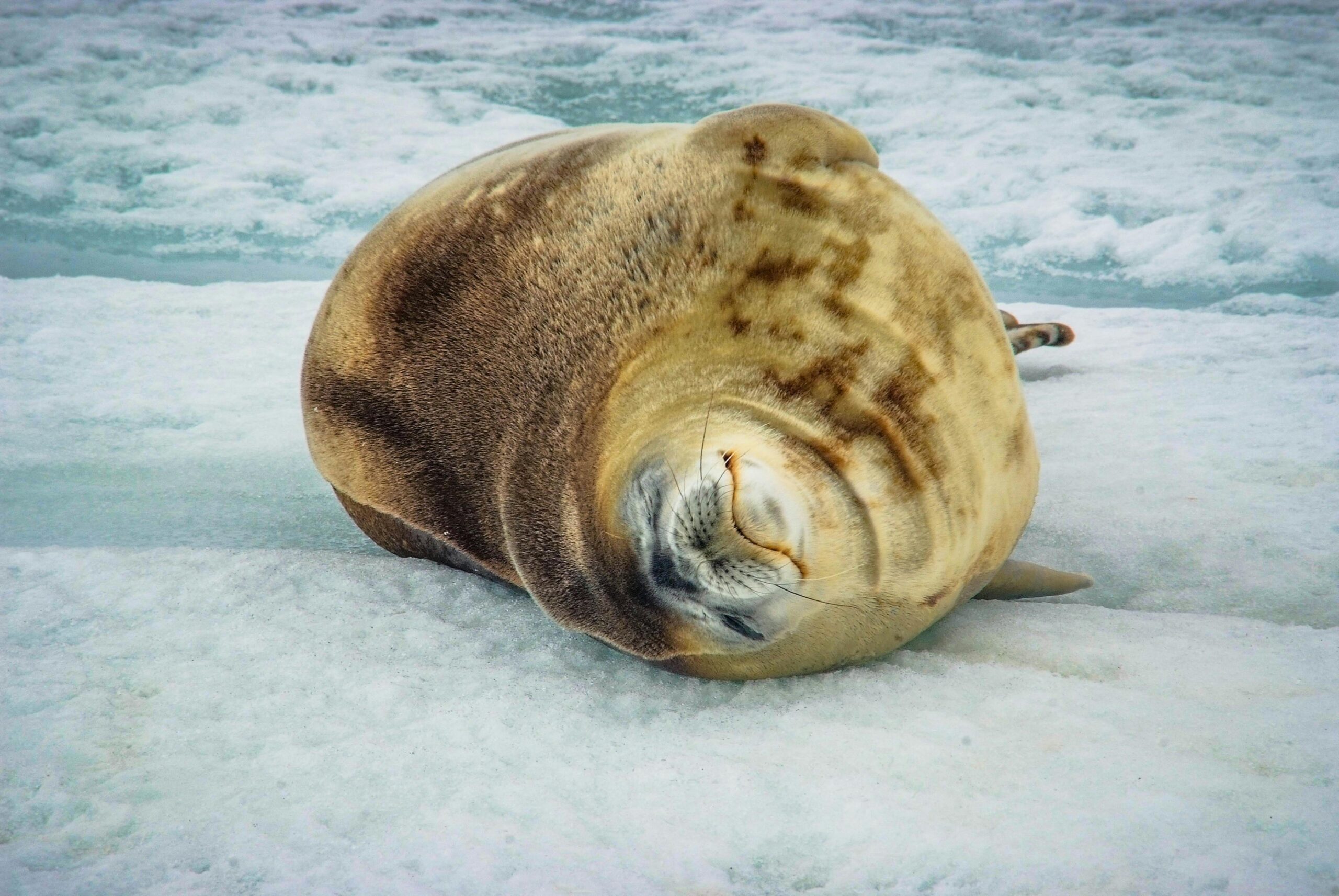
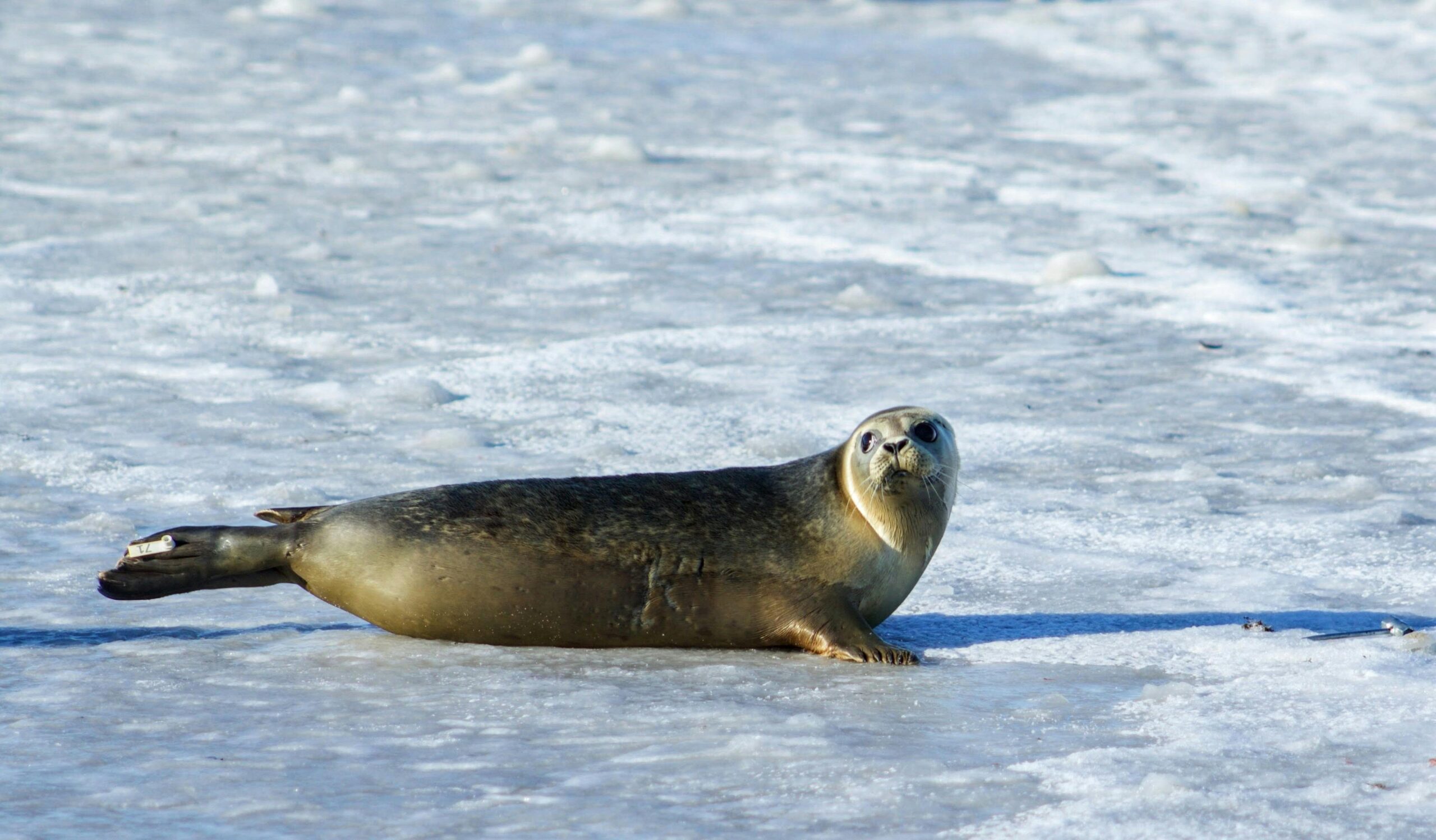
- Leopard Seal and Crabeater Seal sightings on ice floes
- Humpback Whale encounters inside the channel
- Optional Zodiac cruising at water level within the channel
- Glacier calving sights and sounds
Lemaire Channel — The Most Photographed Place in Antarctica
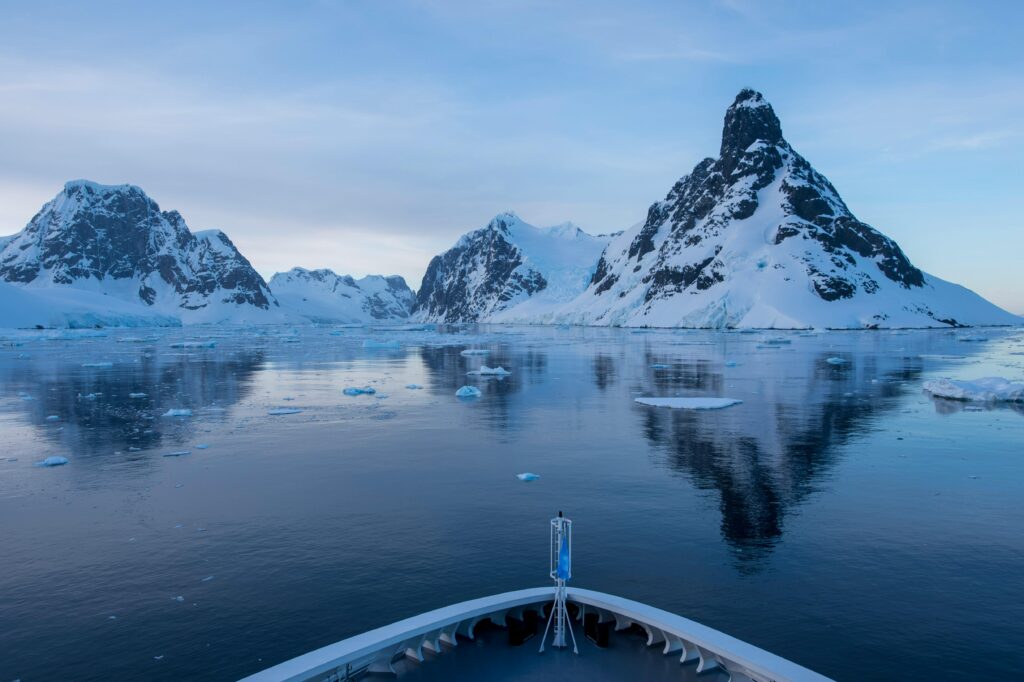
The Lemaire Channel has a nickname that it has carried for decades among Antarctic expedition travellers: Kodak Gap. In the era of film photography, this was the place where guests were known to burn through more film than anywhere else on the entire voyage. In the era of digital photography, nothing has changed except that the only limit is the size of your memory card. The Lemaire Channel is, quite simply, one of the most visually extraordinary places on the planet — and it is impossibly difficult to stop photographing it.
The channel is approximately 11 kilometres long and in some places only 1.6 kilometres wide. On both sides, sheer walls of rock and glacier rise almost vertically from the water’s surface, soaring to peaks that disappear into cloud or gleam against a blue Antarctic sky. As a result, the channel creates a natural frame — a corridor of ice, rock, and water that directs the eye forward and upward simultaneously. Because the channel is so sheltered from wind, the water inside it is frequently so still that the cliff walls reflect perfectly in the surface below, creating a double image of mountain and glacier that is reflected underneath in reverse. Consequently, the entire scene has a quality of almost unreal symmetry that very experienced travel photographers describe as one of the greatest natural compositions they have ever encountered.
The ship enters the Lemaire slowly, and it is safe to say that virtually every guest on board is on deck for the entire transit. Moreover, because the channel is so narrow, the scale of the cliffs is impossible to ignore — they seem to rise directly overhead, and the ship’s passage between them creates a genuine sense of drama that is difficult to describe but impossible to forget. Leopard Seals are frequently seen resting on ice floes inside the channel, and Crabeater Seals and Weddell Seals are also regular sightings. Furthermore, Humpback Whales occasionally enter the channel to feed on concentrations of krill that build up in the sheltered water, and a Humpback surfacing inside the Lemaire — framed by those towering cliffs — produces one of the most spectacular wildlife photography moments available anywhere in Antarctica.
If conditions allow, Zodiacs are also deployed inside the Lemaire Channel, giving guests a water-level perspective that is even more dramatic than the view from the ship’s deck. At Zodiac level, the cliffs appear even taller, the reflections even more perfect, and the occasional boom of a calving glacier — sending a cascade of ice into the still water ahead — is both heard and felt throughout the body.
Neumayer Channel — Sailing Through a Dream Tag: Mountain Waterway
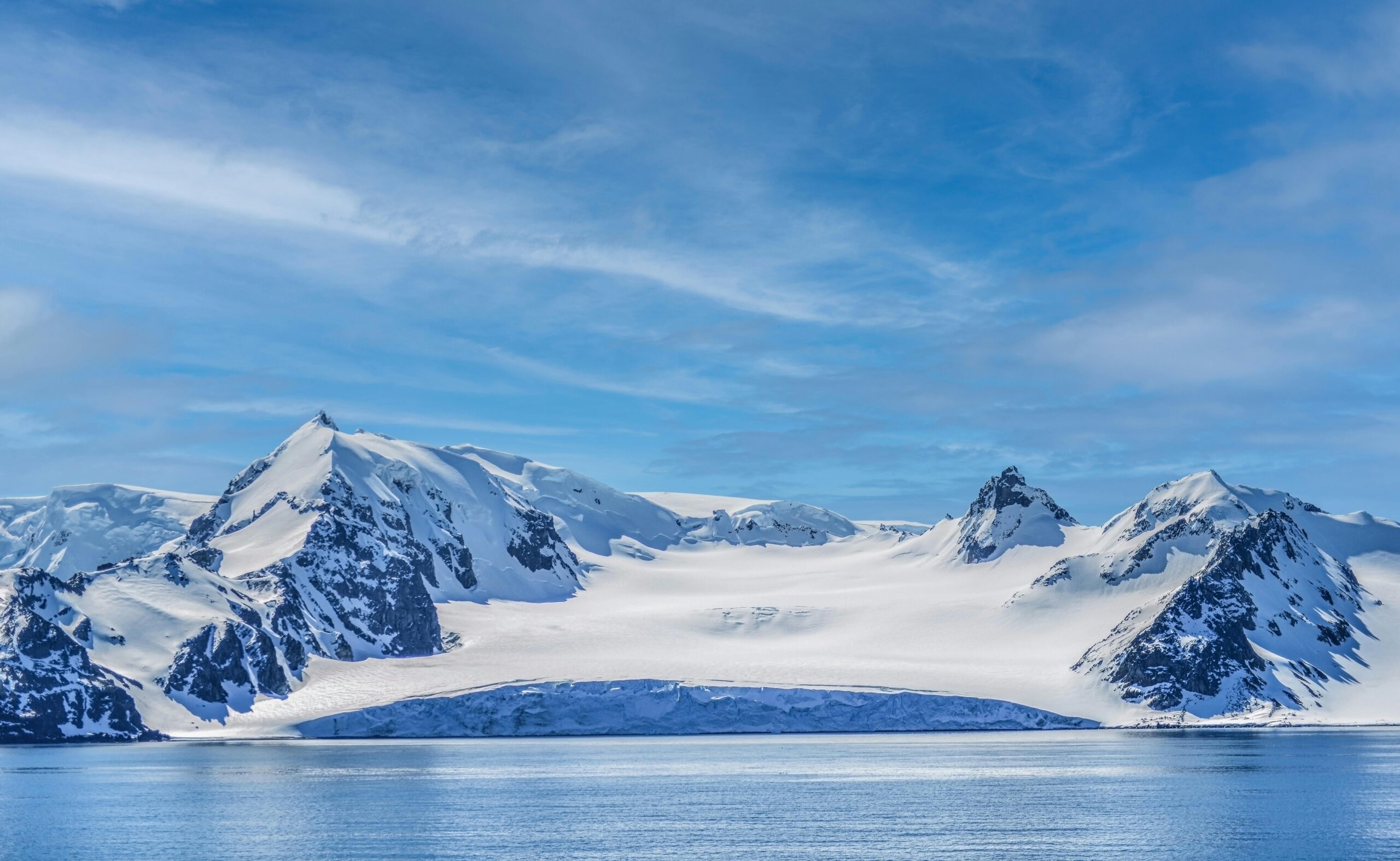
If the Lemaire Channel is Antarctica’s most photographed waterway, the Neumayer Channel is its most atmospheric. While the Lemaire is famous for its narrow drama and perfect symmetry, the Neumayer has a completely different quality — it is wider, more winding, and surrounded by mountain scenery of such scale and grandeur that guests consistently describe sailing through it as one of the most surreal experiences of their lives.
The Neumayer Channel runs between Anvers Island and the Wauwermans Islands on the western side of the Antarctic Peninsula. It is significantly longer than the Lemaire, and because it curves and winds between high peaks on both sides, the view from the ship is constantly changing as the vessel rounds each bend. As a result, the experience of transiting the Neumayer is less like passing through a corridor and more like moving through a sequence of increasingly beautiful mountain landscapes — each one different from the last, each one more dramatic than you expected.
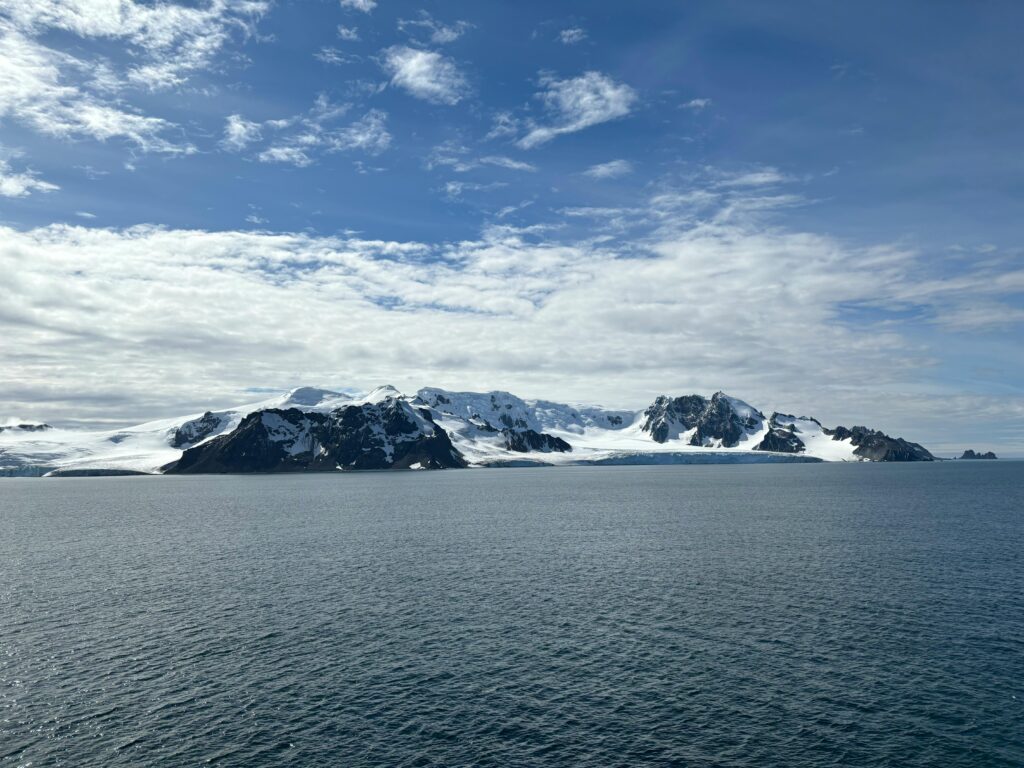
The peaks that line the Neumayer Channel rise to considerable heights and are heavily glaciated along their upper flanks. In November, when the Antarctic summer light is at its most golden and low-angled, these glaciers glow in a way that seems almost artificial — too bright, too perfectly lit, too blue to be entirely real. Furthermore, the channel is wide enough that the mountains on both sides can be seen simultaneously, which gives the transit a panoramic quality that smaller channels cannot match. Because the Neumayer is sheltered from the worst of the Southern Ocean’s weather, the water inside it is also frequently calm, and the mountain reflections that appear in still conditions are genuinely breathtaking.
Wildlife is abundant throughout the Neumayer transit. Antarctic Shags nest on cliff faces along the channel walls, Humpback Whales are regularly spotted feeding in the deeper water at the channel’s centre, and Minke Whales — smaller and faster than Humpbacks — are frequently seen moving quickly through the calmer inshore waters. Additionally, Zodiac operations are sometimes conducted within the Neumayer, allowing guests to approach the channel walls at water level and look upward at the glaciers from directly below.
The Neumayer Channel also has genuine historical significance. It was charted in the early 20th century during the Heroic Age of Antarctic exploration, and sailing through it today connects you in a very direct way to the generations of explorers who first navigated these waters in wooden sailing ships, without weather forecasting, without GPS, and without any certainty of what lay around the next bend.
Key Experiences:
- Long, winding transit through high glaciated mountain peaks
- Panoramic views on both sides simultaneously
- Constantly changing mountain scenery as the ship rounds each curve
- Antarctic Shag cliff nesting colonies
- Humpback and Minke Whale sightings in the channel
- November golden-light glacier photography
- Historical connection to the Heroic Age of exploration
WILDLIFE YOU WILL ACTUALLY SEE
The Animals You Will Actually See
Unlike most wildlife destinations, Antarctic animals have no natural fear of humans. As a result, encounters are often astonishingly close and unhurried.
Wandering Albatross
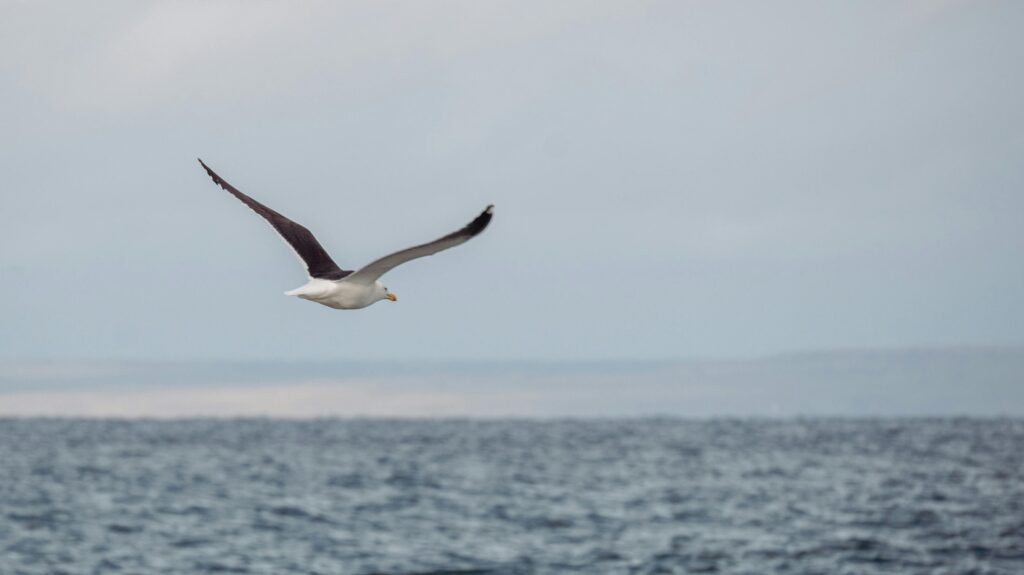
The largest wingspan of any living bird, reaching up to 3.5 metres. These extraordinary seabirds follow the ship across the Drake Passage for hours at a time, barely moving their wings as they ride the updrafts. Up close, their size is genuinely shocking.
Orca
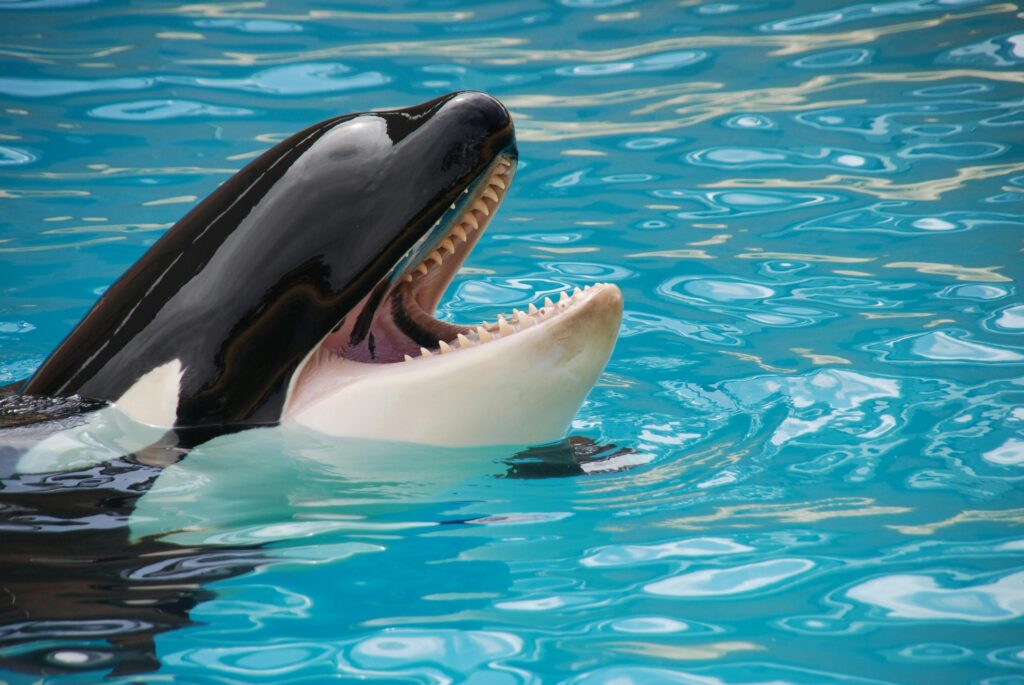
Killer whales are seen in the Antarctic Sound and along the Peninsula’s western channels, where they hunt seals and penguins along the ice edge. Pod sightings from the ship’s deck are among the most dramatic wildlife moments of the entire voyage.
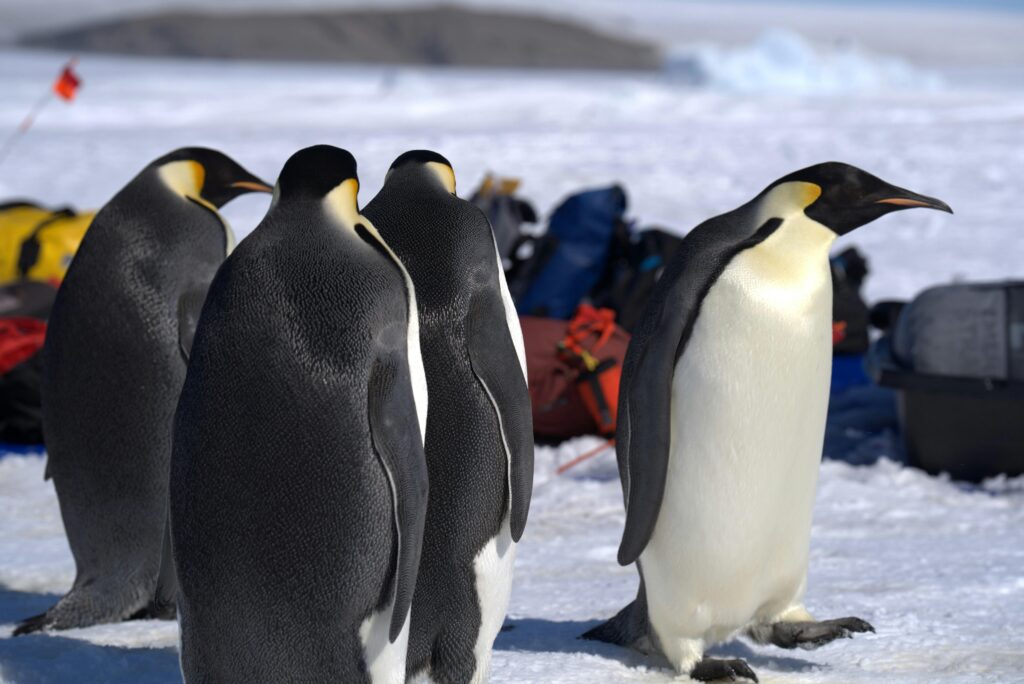
Emperor Penguin
Not guaranteed, but the Antarctic Sound is one of the more likely sites on this itinerary for an Emperor Penguin encounter. Sightings depend on ice conditions and timing, and any Emperor sighting is treated as a major event by the expedition team.
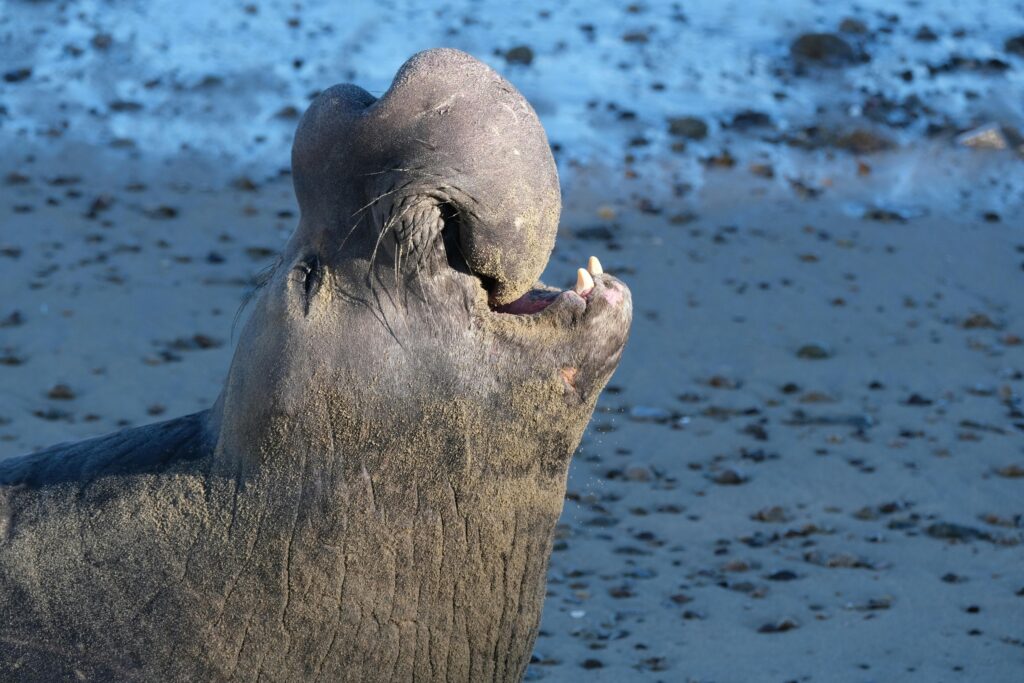
Southern Elephant Seal
The largest seal on Earth. Males can weigh over 2,200 kg. Congregate in impressive numbers at Hannah Point.
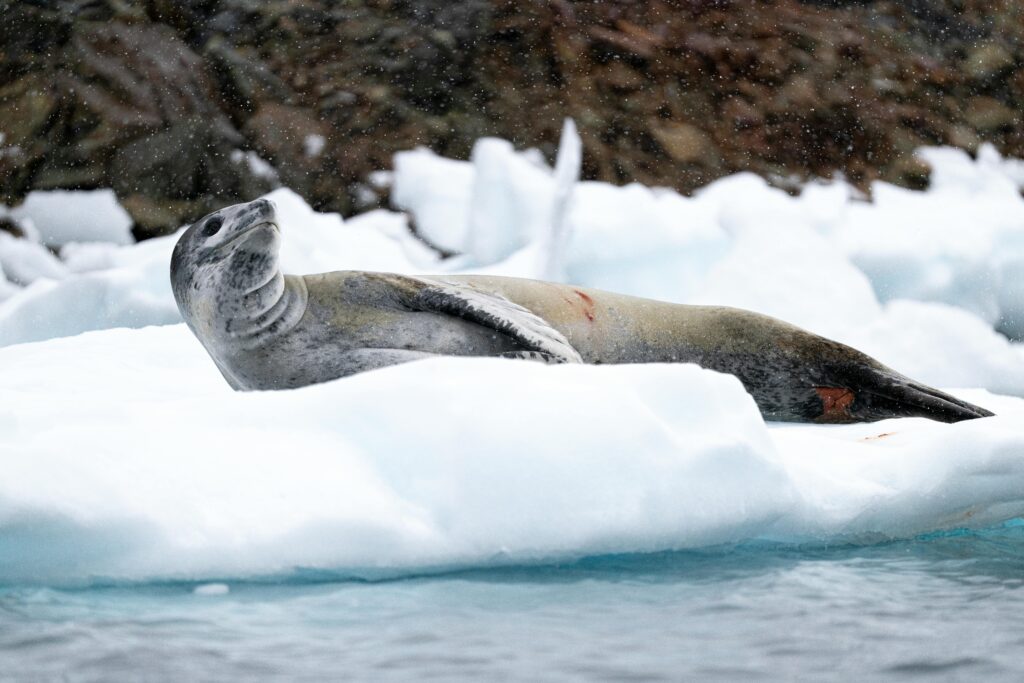
Leopard Seal
Often found resting on ice floes near penguin colonies throughout the Peninsula. The Peninsula’s apex predator, both powerful and surprisingly graceful in the water.
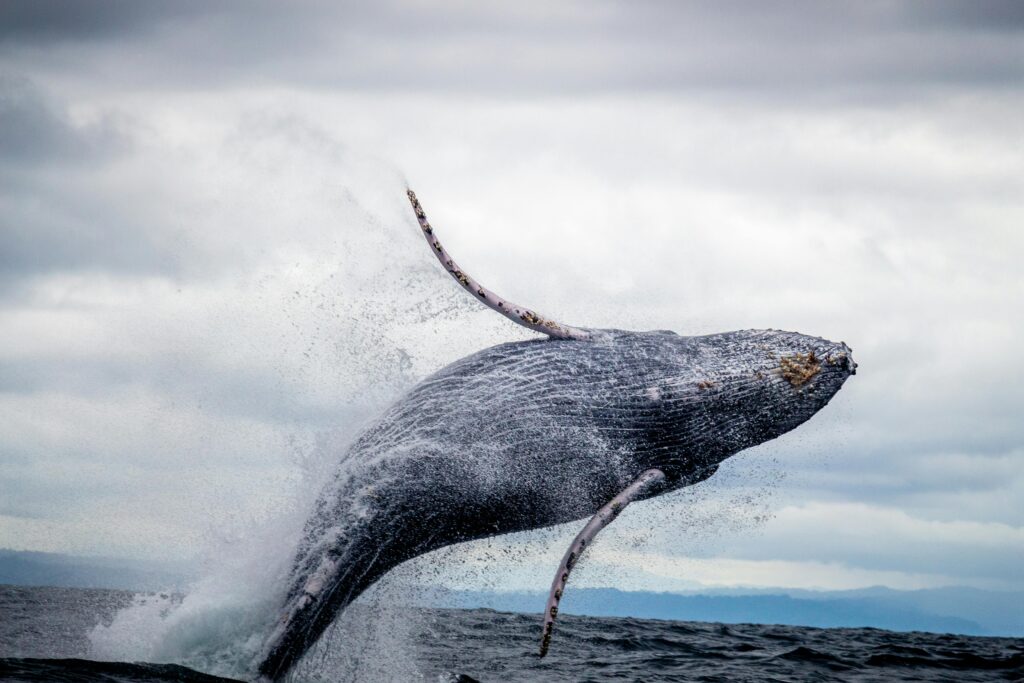
Humpback Whale
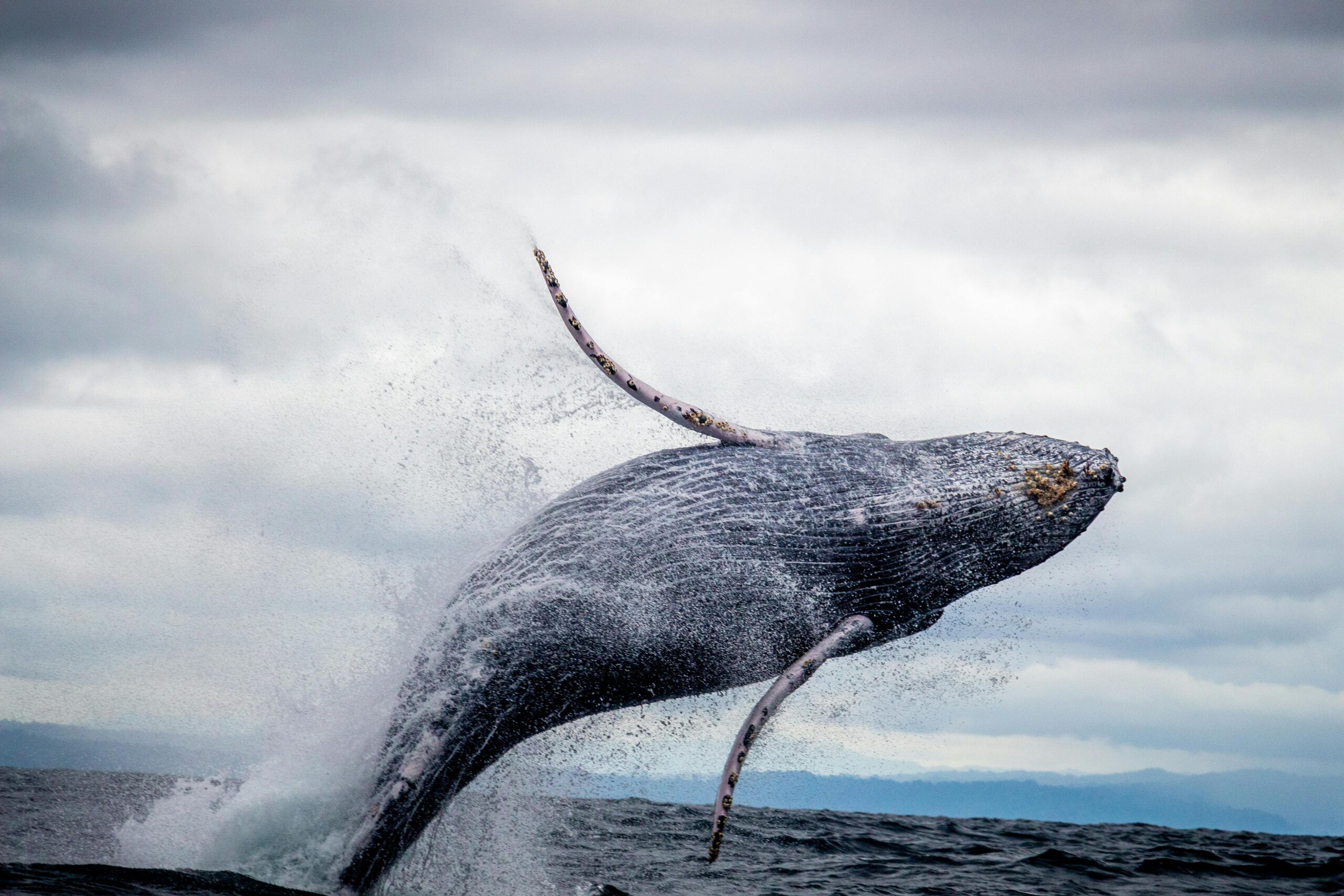
The Drake Passage and waters around the South Shetlands are prime feeding grounds. Sightings of breaching whales are common during November.
SIX REASONS THESE WATERWAYS CHANGE THE WAY YOU SEE THE WORLD
Six Reasons Antarctica's Channels and Passages Are Unlike Any Water on Earth
01 — The Drake Passage Is a Living Part of Exploration History Every great Antarctic explorer in the Heroic Age — Shackleton, Amundsen, Scott, Mawson — crossed this same stretch of ocean in wooden sailing ships with no weather forecasting and no GPS. Crossing it on a modern polar-class vessel, while your expedition team delivers lectures on those journeys, connects you to that history in a visceral and immediate way.
02 — The Lemaire Channel Is the Single Most Photographed Place in Antarctica There is a reason it is called Kodak Gap. The combination of narrow width, towering cliffs, perfect glacier reflections, and frequent wildlife encounters inside the channel produces a density of extraordinary photographic moments that is simply unmatched anywhere else on the voyage.
03 — The Neumayer Channel Has No Equal for Sheer Mountain Scenery The winding, panoramic quality of the Neumayer transit — with high glaciated peaks on both sides and constantly changing views as the ship rounds each curve — creates a sustained experience of mountain grandeur that guests consistently describe as the most beautiful sailing they have ever done.
04 — The Antarctic Sound Shows You Ice at a Scale That Redefines Scale Tabular icebergs several kilometres long are not something the human brain is calibrated to process easily. Standing on the deck of a ship beside one of these structures — and then seeing the ship looking small beside it — permanently changes your understanding of what large actually means.
05 — Wildlife Does Not Stop Between Landings Albatrosses follow the ship across the Drake. Humpback Whales surface in the Lemaire. Leopard Seals rest on floes in the Antarctic Sound. The transits between landings are not waiting time — they are some of the richest wildlife watching hours of the entire voyage.
06 — Every Waterway Is a Different World The open fury of the Drake, the narrow mirror perfection of the Lemaire, the winding mountain grandeur of the Neumayer, the floating iceberg city of the Antarctic Sound — these four waterways are so different from each other that they feel like four separate destinations rather than four sections of a single journey.
FAQ
Frequently Asked Questions
Yes — depending on your cabin’s position and which side of the ship faces the channel during transit, your balcony will offer views of either the port or starboard channel walls. However, because the Lemaire Channel transit is one of the most anticipated moments of the entire voyage, virtually every guest — regardless of cabin type — chooses to be on the outer decks during the full transit. The viewing decks offer a 360-degree perspective that no single cabin balcony can match, and the expedition team always announces the channel entry in advance so no guest misses it.
The Lemaire Channel is approximately 11 kilometres long, and the ship navigates it slowly to maximise the viewing and photography experience for all guests. A typical transit takes between one and two hours, depending on conditions, ice in the channel, and whether Zodiac operations are conducted within it. Your expedition team will announce the start of the transit in advance and provide live commentary throughout, explaining the geology, naming the peaks, and pointing out any wildlife encountered along the way.
The Drake Passage crossing is genuinely excellent for seabird watching, and many guests are surprised by how much wildlife activity occurs during the two-day crossing. Wandering Albatrosses — with wingspans of up to 3.5 metres — follow the ship throughout the crossing, and several species of petrel, including Cape Petrels, Antarctic Petrels, and Giant Petrels, are also abundant. Your onboard ornithologists are available on the outer decks throughout the crossing to help guests identify species and explain their behaviour. Additionally, Humpback Whales and Fin Whales are occasionally spotted in the Drake during the southbound crossing as the ship enters colder and krill-richer waters.
Gallery
Highlights of South Shetland Islands